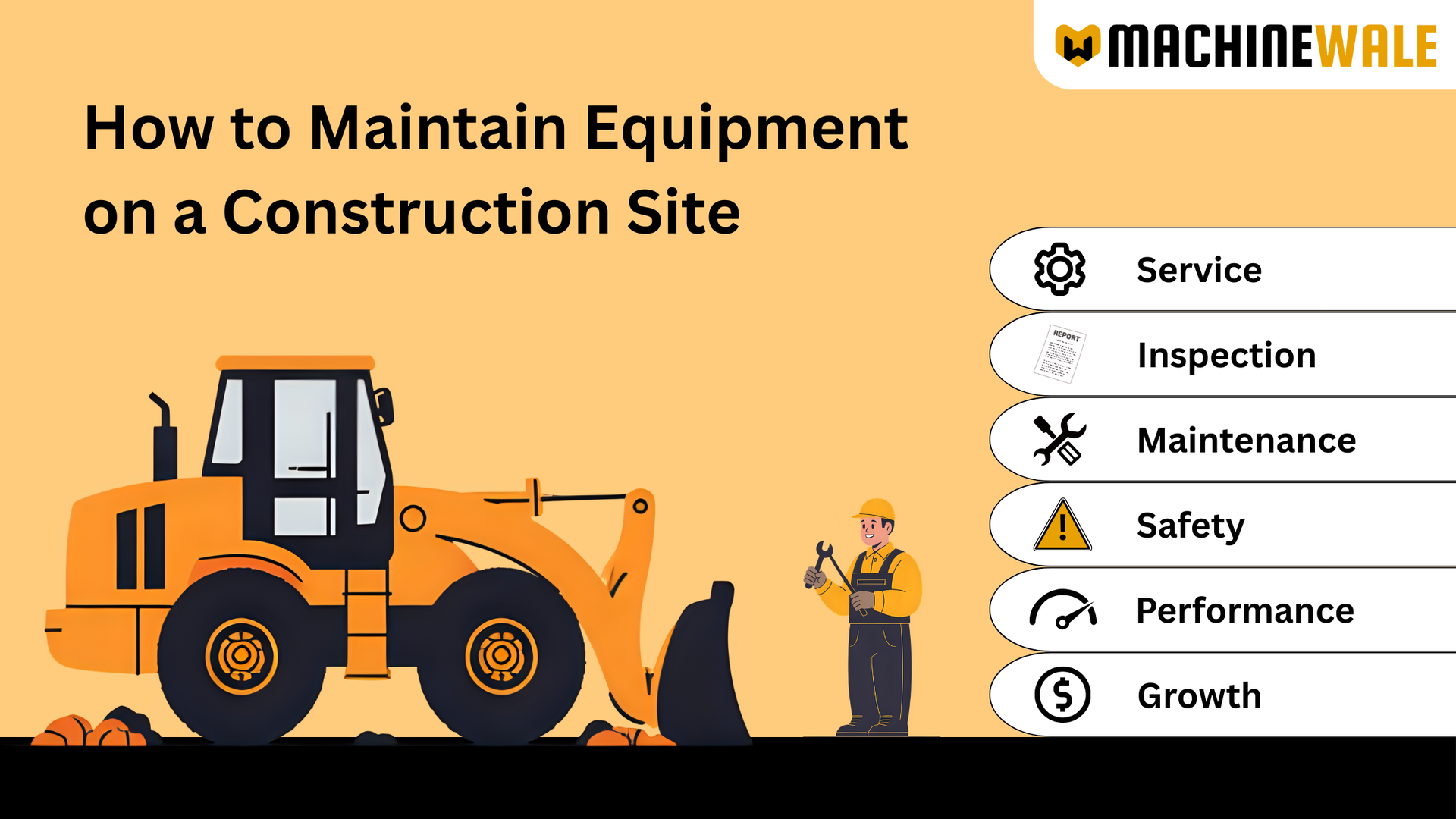
How to Maintain Equipment on a Construction Site?
Updated on February 23, 2026
In today's competitive market of the Indian construction industry, proactive machine maintenance is very important for your heavy construction equipment for safety and profitable business. The most effective strategy for reducing equipment downtime and controlling operating costs is to do routine maintenance, including scheduling inspections and checking safety devices.
This regular maintenance process reduces breakdowns and extends equipment usability, which can help you save money while increasing resale value. Whatever the type of equipment on-site or other factors, proper maintenance guarantees that the project is completed on time and on budget. We have prepared a comprehensive guide on creating a cost-effective maintenance plan for your heavy equipment. Explore the guide below and care for your equipment.
What is Construction Equipment Maintenance?
Construction equipment maintenance is a proactive approach to the routine inspections, servicing, and good repair of heavy machinery to keep it operating in proper working order and efficiently. It includes activities such as lubrication, cleaning, worn and damaged parts replacement, and performance data checks to reduce failure occurrences and costly breakdowns.
By reducing equipment breakdown and extending equipment lifespan, machinery maintenance is essential in keeping projects on time and improving equipment service life. Regular maintenance also minimizes emergency repair and machinery failure while ensuring that all safety and compliance standards are fulfilled.
Why is construction equipment maintenance important?
Maintenance managers should know that a proper maintenance strategy is essential for heavy construction equipment, which can help in project success. Here are some key benefits.
1. Boosts Productivity
Proper equipment maintenance helps heavy machinery perform at its best, allowing staff to complete tasks quickly and with no interruptions. This results in smoother workflows and completes projects faster.
2. Improves Operational Efficiency
Routine maintenance and conducting regular inspections reduce inefficiencies such as emergency repair, hydraulic fluid wastage, and equipment downtime, ensuring equipment functions accurately and delivers its peak performance.
3. Controls Costs
Regular servicing and routine inspections help to reduce costly breakdowns and damage equipment life. Additionally, it minimizes equipment maintenance costs and increases the resale value of equipment.
4. Ensures Safety Compliance
Properly following the maintenance process for equipment helps to minimize the risk of accidents and reduce damage to equipment components, which provides a safe environment for operators and increases equipment lifespan.
5. Maximizes Equipment Uptime
Proper equipment maintenance and routine inspections reduce equipment failure on-site and reduce downtime. A properly maintained machine helps you provide reliable service to your consumers.
How to Maintain Equipment on a Construction Site?
You should know about this equipment maintenance strategy so you keep your machine in top condition. Below are key practices you should follow on the worksite.
1. Conducting Daily Inspections
Conducting daily inspections and regular servicing is key to maintaining equipment on a construction site. These regular checks help to find faults early and reduce downtime and costly repairs. By following a preventive maintenance plan and storing records on a computer system, you can extend the life of heavy equipment along with hydraulic and cooling systems. A well-maintained machine provides a safe environment and cost efficiency in your projects.
2. Following the Manufacturer’s Maintenance Schedules
Follow all the manufacturer's recommendations provided for equipment maintenance tasks, which will improve the safety mechanisms of equipment, energy consumption, and other factors. Do these steps to not only keep well-maintained equipment but also help you claim the equipment warranty.
Equipment care is more than just a routine process; it plays an important role in reducing equipment breakdowns and downtime. Following all guidelines guarantees optimal equipment performance and provides reliable service.
3. Proper Lubrication and Cleaning
Following proper lubrication as per the manufacturer's recommendations, you get more benefits regarding your machinery health, and also provide better operational efficiency during the operations. It also benefits by minimizing friction and providing a stable hydraulic system.
A well-maintained machine should not overheat in any kind of operation. The appropriate lubricants include engine oil, hydraulic oil, grease, gear oil, and more. Regular cleaning and maintenance prevent dirt, dust, and grime from entering sensitive parts of equipment.
4. Training Operators for Correct Usage
Training teaches operators the limitations and capacities of construction equipment. Every operator must know about operational capabilities, which deliver equipment longevity and reduced equipment breakdowns.
Trained operators should know how we get benefits from a machine's in-built fuel-saving features and how to use them for better efficiency in any weather. It helps to reduce idle time and fuel wastage.
5. Keeping Accurate Maintenance Logs
Detailed maintenance records are key to a preventive maintenance program. This log data is helping in calculating the resale value of equipment. When you sell or trade your machine, buyers consider your machine's value to be higher than others. By analyzing log data, you're able to identify the part that is constantly damaged, letting maintenance workers replace it before a failure occurs.
Types of Construction Equipment That Need Regular Maintenance
Different pieces of equipment require routine maintenance to provide high performance constantly. Below are some key equipment categories:
1. Excavator
Excavators are most commonly used for digging, trenching, lifting, and other operations. Some of the parts of excavators need regular inspections and maintenance, such as hydraulic systems, tracks, electrical systems, and air tank systems. These help in consistent performance and higher productivity.
2. Backhoe Loader
In a backhoe loader, the backhoe and loader bucket work efficiently. It will play a key role in backhoe loader performance and functionality. To maximize productivity and reduce downtime, you need to maintain the drive systems, the backhoe loader's attachment point, and the brake system.
3. Wheel Loader
Wheel loaders require checking tire pressure and its condition, and inspecting the bucket, coolant systems, hydraulic systems, and engine. Regular maintenance of all these checklists provides superior power, efficiency, and stability in loading and material handling tasks.
4. Dozer
Dozers are used for pushing and leveling soil or debris in many applications. You conduct blade inspections, undercarriage inspections, and track checks to ensure durability and smooth performance on any rough surfaces during heavy-duty operations. Furthermore, check for oil and filter changes, which will drive higher performance.
5. Crane
Cranes are mostly used for lifting and heavy material handling work. Moving parts need routine lubrication, including hydraulic systems and safety mechanisms for safe operation. Also, you need regular inspections of the wire rope and pulleys in the crane for accurate lifting operations in any application.
Final Thoughts on Maintaining Equipment on Construction Sites
Performing routine maintenance tasks is the key factor for safe, efficient, and cost-controlled construction operations. By investing in maintenance activities and daily servicing, businesses get long-term performance of construction equipment, safety, and reduced downtime on-site.
Platforms like MachineWale make the process of buying, selling, and renting heavy equipment simple for contractors and businesses, along with smart tools for comparing specifications and features for choosing the right equipment for your project.
Start Managing your Business Automation from Anywhere.
Get Started Now