Top 7 Benefits Of Buying Used Heavy Equipment
Updated on February 23, 2026
The demand for used equipment is increasing rapidly in today's construction industry, where contractors and businesses look for cost-effective, sustainable, and smart machinery solutions. While purchasing new equipment can be costly, it involves long delivery times, which can also cause delays in both operations and projects.
Buying used equipment is a perfect solution that can offer faster availability at lower costs. Additionally, you can get high-quality and well-maintained machinery, which offers higher productivity without making a large investment in new equipment.
The following benefits will clarify why used equipment can be a better option in such scenarios.
What Does Buying Used Equipment Mean
Buying used heavy equipment means purchasing machines that have been previously owned, used, and operated by organisations or individuals. It enters the resale market through dealers, auction houses, or private sellers. Contractors consider used equipment because of the huge price difference, which reduces the chances of losses on resale value and provides lower prices in depreciation and taxation.
Key Benefits of Buying Used Equipment
Below are several points on how used equipment offers more advantages than buying new.
Lower Upfront Cost
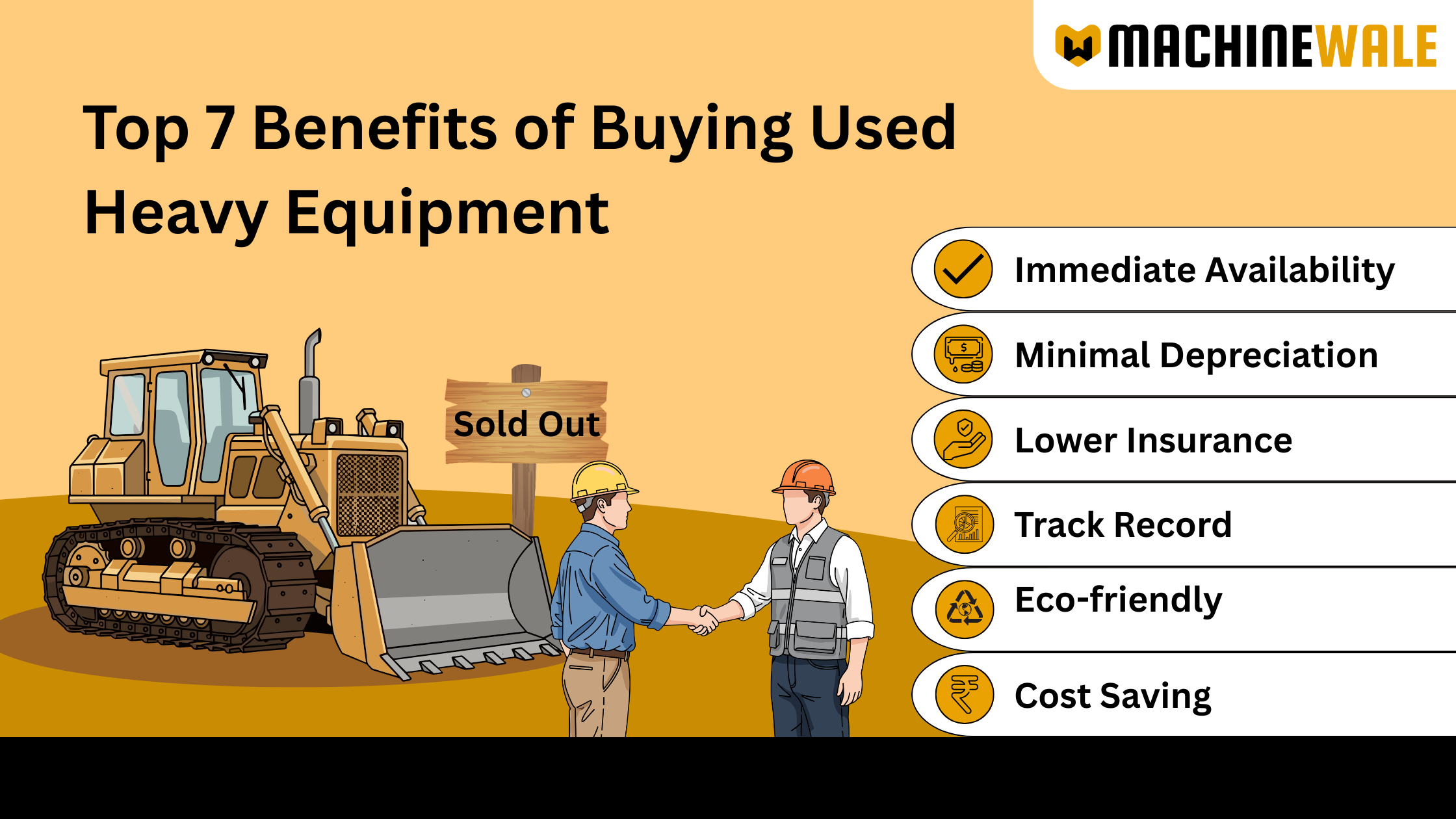
One of the best advantages of buying used equipment is the cost savings. You see the direct price difference between used and new equipment. Additionally, get a chance to buy equipment and its attachments, which are required for your project, under the brand-new equipment price sticker.
Slower Depreciation
Buying used equipment is one of the better ways to reduce costs and improve the resale value of equipment. Depreciation cost reduces the original value of equipment, whether you have a used or new one. For example, if you bought new equipment, then its depreciation cost is high, and if you bought used equipment, then its depreciation is lower than new equipment.
Immediate Availability
If you bought new equipment from any dealer, it's taking time to be delivered to you after the full amount is paid, and during some festival times, the waiting time is longer than normal days. But used equipment is generally available after the transfer of ownership, and you should continue to run your operations. This is especially helpful for contractors whose equipment has recently been damaged or is under maintenance, and operations are still pending.
Wider Selection of Models
A benefit of buying used equipment is that it's available in various ranges, including makes and models. If you buy a recent-year model from reputed dealers, then you get the same technology and features that are available in used equipment that you get when you buy new equipment at lower prices. You can show the used equipment listing on various online marketplaces like MachineWale, so you get used equipment near your location.
Lower Insurance Costs
Generally, an insurance company's premium is based on the equipment's purchase price and replacement costs. Therefore, used equipment insurance is always a lower value than buying new. Businesses and contractors are trying to reduce their operational expenses and try to convert more revenue from their projects at the lowest operating costs. It can result in cost savings for businesses.
Environmentally Friendly Choice
Using second-hand equipment promotes environmental benefits. The used equipment market decreases the production of new equipment, helping to save raw materials and energy needed for manufacturing. This also reduces the environmental impact of carbon emissions. It helps us maintain a greener environment for a better future.
Proven Reliability
You can check the previous performance reports and records of the used equipment by its track record. Many used machines maintain a good track record and provide output the same as new equipment. The previous owner has cared for the equipment, performing regular maintenance and inspections; this will definitely provide the best efficiency and performance.
Risks or Challenges of Buying Used Equipment
We've seen the advantages of used equipment, but in some scenarios, used equipment has limitations. Below are several points about the risks or challenges faced when buying used equipment.
Potential Hidden Repairs
If you're researching used equipment online and buying it by brand, model, features, and user feedback, you get an inspection report from your trusted mechanic. Sometimes issues are related to engines, motors, electrical systems, or any other component. Pre-purchase inspections help you find some issues, but don't give a guarantee.
Limited Warranty
The used machinery doesn't always come with a warranty. Most of the time, machines are out of warranty, which sometimes decreases your equipment value. In these cases, you must do two things:
- Ask the seller if they purchased an extended warranty from the brand. An extended warranty doesn't cover everything, but it can be useful in reducing some repair costs.
- Request maintenance and service records before purchasing any equipment. Maintenance and service records help determine the condition of equipment.
Outdated Technology
In this modern construction world, technology is changing day by day, and if you are planning to buy used equipment, then you may not get the benefits of new technology and features like telematics and diagnostics, which are currently present in the market. Your operations and tasks heavily depend on the latest features and technology, so it has become a limitation for you.
Shorter Remaining Lifespan
A new machine's life is longer than used equipment. It depends on how the previous owner used it, cared for it, and maintained it. If the seller regularly does services and maintains it, then it offers you the best efficiency and performance after years of use. Make, year, driven km, and operating hours are secondary sometimes if the equipment is well-maintained.
How to Inspect Used Equipment Before Buying
Below are some key points that you should consider and check before buying used equipment.
Check Engine & Hydraulic Components
Before investing in used equipment, check the engine's current condition and identify if there is a critical problem there to avoid costly repairs. Checking the engine includes leaks, wiring, motors, and an engine exhaust colour check. In hydraulics, you should check its tank, cylinders, and rods, and it is suggested that you do an on-time hydraulic test and run the small operation.
Evaluate Tires, Tracks & Undercarriage
There are several details you should check in used equipment, whether it's track-based or wheel-based.
- Wheeled: Check the alignment of tyres, cracks & punctures on tyres, and valves or rims.
- Tracked: Check the grouser height, track shoes, chain, and rollers (top & bottom).
Also, cleanliness is a major factor you should check before buying it, whether it's wheeled or tracked.
Examine Structural Integrity (Cracks, Welds, Bends)
Checking the body structure and chassis is the most critical part of inspecting the used equipment. You should check for loose bolts, welded components, and the chassis, or ask the seller if they replaced any parts in the equipment. If you find replaced parts, then have them checked by experts. The undercarriage is the most important component of the equipment. So when you check them, you must have an expert technician with you because their repairs are expensive.
Review Service & Maintenance History
Whether the maintenance history was done perfectly according to the manufacturer's guidelines or not, you must check it. Additionally, check the oil changing gaps, filter replacement time gaps, and whether proper lubrication or greasing has been done or not. If you found any major replacement issues with equipment, you should deeply check that component or ask the seller about it.
Test Drive for Noise, Smoke & Functionality
- Checking the noise from different components, including the engine, hydraulics, brakes, and other components.
- You should check the smoke colour because some issues start from it, whether it's blue, black, or white.
- You should check the functionality of the equipment from your side by running the machine and performing small operations.
Verify Hours, Ownership Records & Documentation
Confirm the number of operating hours by checking the physical hours meter or checking the ECU/ECM, which provides accurate engine running hours. Cross-check serial numbers and ownership documents to save from fines, hidden liabilities, or fraud. Additionally, ask the seller about the warranty details of the equipment and the maintenance & safety records of the equipment.
Why Buying Used Equipment Is a Smart Choice
Purchasing used equipment is a smart and cost-effective choice for businesses. Used equipment provides high productivity and smooth operations without overspending or a large investment. It offers well-maintained and high-quality machinery at lower costs. It helps in reducing depreciation and saving on taxation, along with faster ROI.
Buying used heavy equipment is faster and reliable with trusted platforms like MachineWale; buyers can check thousands of used equipment listings and also compare any models. Choose machinery that fits your project's needs and budget.
Start Managing your Business Automation from Anywhere.
Get Started Now