Backhoe Loader vs Wheel Loader: Key Differences, Uses, and Comparison
Updated on February 23, 2026
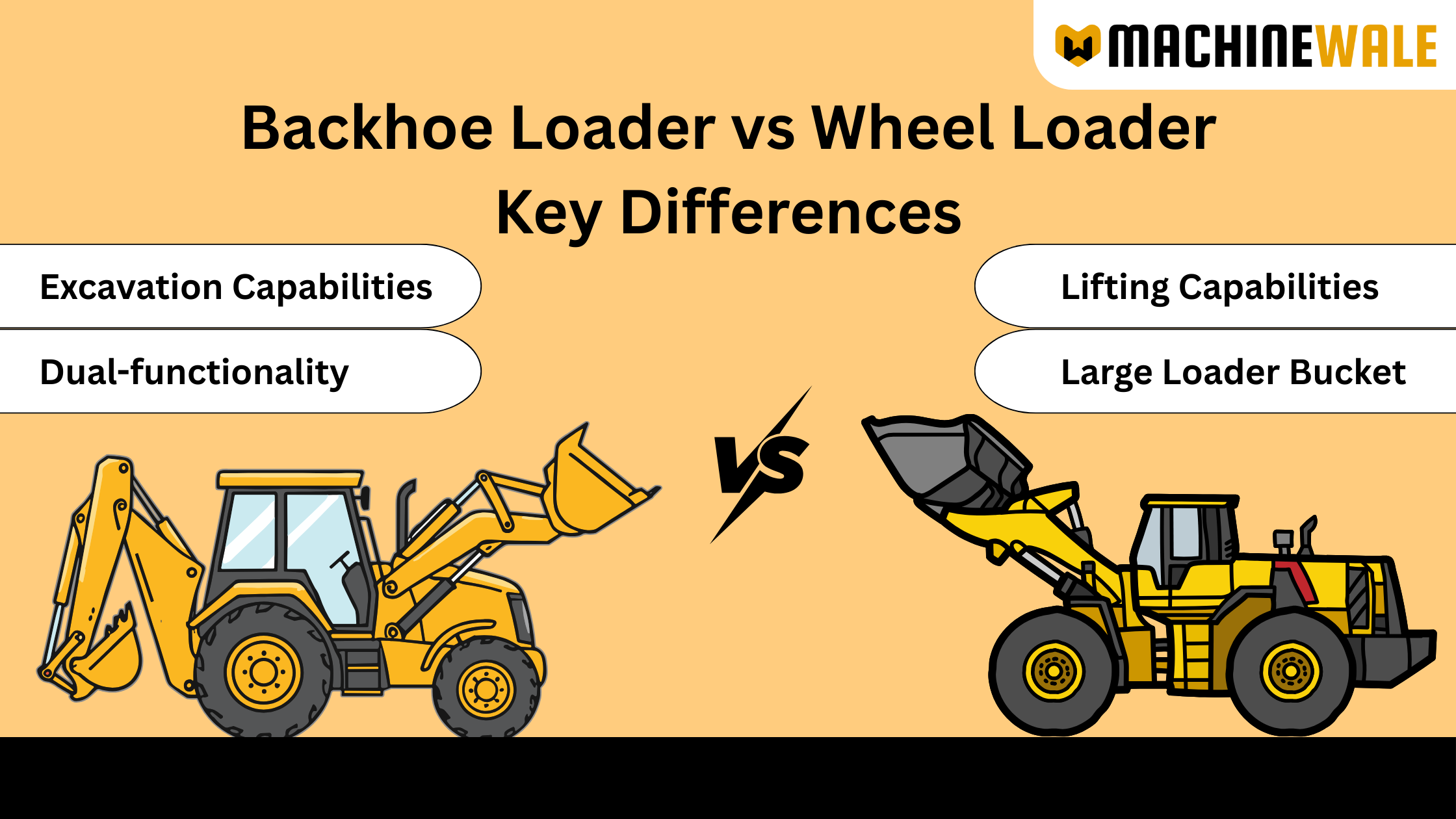
In India, construction workers, contractors, and infrastructure developers often compare backhoe loaders and wheel loaders. Both machines are widely used on construction sites. Backhoe loaders are ideal for precision digging and multitasking, while wheel loaders are suited to high-volume material handling and transporting materials. Choosing the right equipment is crucial for productivity and cost control. This blog explores the key differences and use cases of these loaders to help you choose the best option for your needs.
What is a Backhoe Loader?

A backhoe loader is a combination of a loader and a backhoe in one machine. It handles both digging and loading tasks efficiently on construction sites. The machine features a front bucket that provides precise digging and a loader for material handling tasks.
Backhoe loaders are commonly used for trenching tasks, utility work, small-scale construction, and digging operations in confined spaces. Its long boom and arm provide higher digging depth capabilities. This machine is a perfect option for earthmoving tasks due to its ability to perform loading tasks simultaneously and its excellent attachment compatibility.
What is a Wheel Loader?
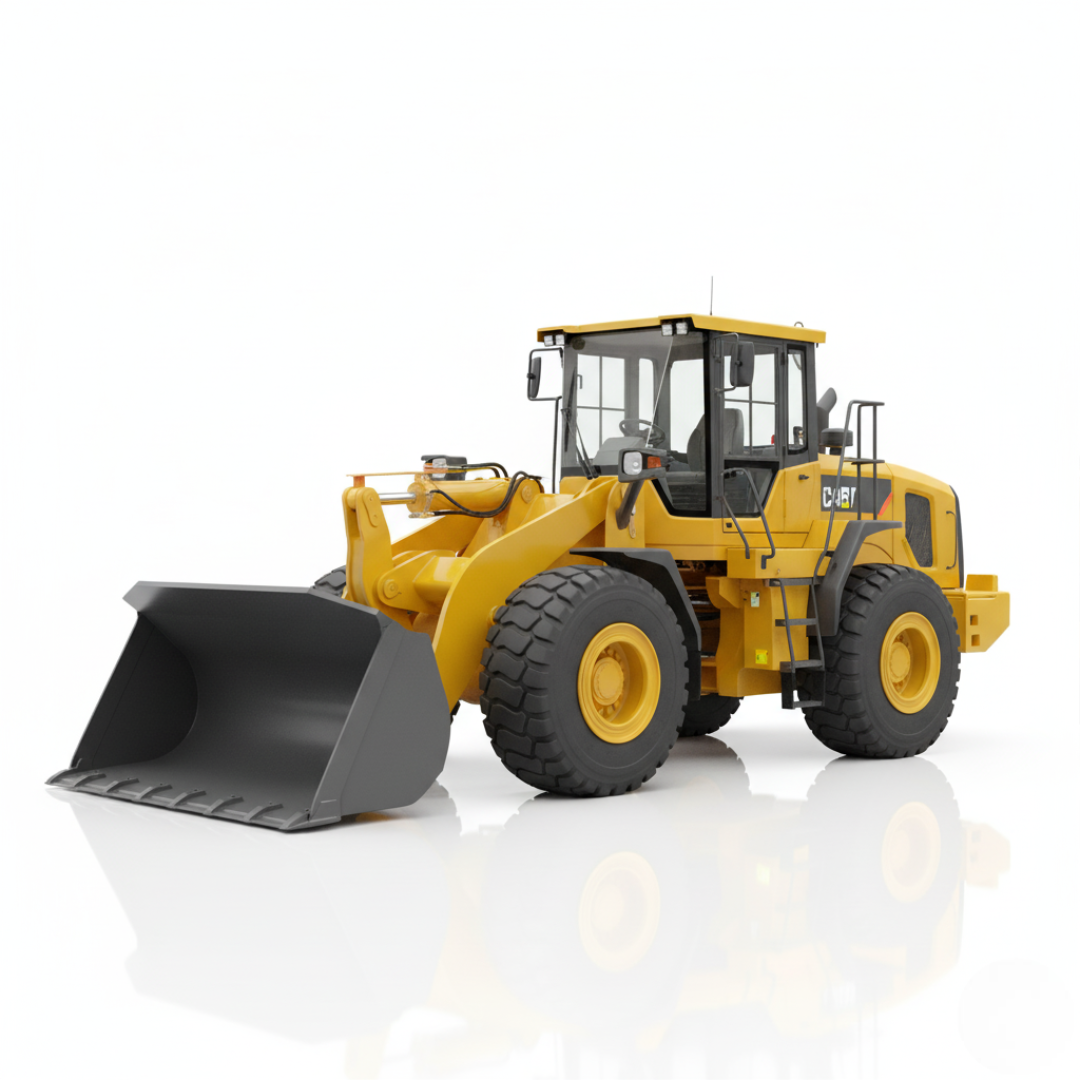
A wheel loader is a powerful and reliable machine for heavy material handling tasks on large construction projects. It is equipped with a large front-mounted bucket used for lifting and transporting materials on job sites. It has a superior lifting and loading capacity.
Wheel loaders typically have a higher operating weight and lifting capacity than backhoe loaders. They are ideal for loading trucks and handling materials such as sand, gravel, coal, and aggregates. Common applications include mining, quarrying, cement plants, and large infrastructure projects for transporting heavy loads efficiently.
Backhoe Loader vs Wheel Loader: Key Differences Explained
Choose the right machine for your projects that improves productivity, performance, and safety on job sites. Below are listed points to explain key differences, including their strengths, weaknesses, and capabilities.
1. Functionality and Working Mechanism
Backhoe loaders are combined with a front-mounted bucket for handling heavy loads efficiently and a rear-mounted backhoe attachment for precise digging. This dual-functionality feature helps to manage many tasks, from trenching operations to excavation tasks.
A wheel loader is specially designed for material handling. Its large front bucket and an advanced hydraulic system allow it to lift and move large amounts of materials quickly and efficiently.
2. Digging Capability and Excavation Depth
Backhoe loaders are known for doing extensive digging on job sites. They are widely used in drainage work, utility work, construction, and infrastructure development. They have a backhoe arm, offering higher digging depth for foundations, pipelines, and cables.
A wheel loader excels in lifting operations and loading materials. It's not built for deep excavation tasks. It's not combined with the digging mechanism like a backhoe loader.
3. Loading Capacity and Bucket Size
A backhoe loader comes with a smaller front bucket and provides a minimal loading capacity and bucket size. It is an ideal option for small material handling tasks, but it's not for handling bulk materials compared to wheel loaders.
Wheel loaders have higher operating weights and a larger bucket size compared to backhoe loaders. They are designed to handle massive loads efficiently on large infrastructure projects. They are commonly used for loading trucks and lifting pallets on work sites.
4. Manoeuvrability and Site Conditions
Backhoe loaders perform well in small and tight job sites, specifically in residential construction and urban areas. Their compact size allows them to work easily around buildings and narrow roads.
Wheel loaders basically come with higher stability and a larger size, which allows them to perform well in many applications or on uneven terrains like quarries, mining sites, ports, and highway projects.
5. Versatility and Attachments
Backhoe loaders are known for their versatility for working with multi-attachments such as hydraulic hammers, augers, grapples, and trenching buckets. Also, their dual functionality makes them the best multitasking machine with digging and loading capacities.
A wheel loader is a powerful machine, but it works with fewer attachments compared to a backhoe loader. It is primarily used with material-handling attachments such as forks and high-dump buckets.
6. Operating Cost and Maintenance Considerations
Backhoe loaders generally consume lower fuel and operating costs than wheel loaders. Their less powerful engine generates enhanced fuel efficiency during work, and its compact size reduces operating costs.
Meanwhile, wheel loaders require higher fuel and operating costs due to their powerful engine, large size, and robust lifting capacity. These key considerations make them high-maintenance machines, but they deliver higher productivity on large-scale projects.
Backhoe Loader vs Wheel Loader: Comparison Table
| Feature | Backhoe Loader | Wheel Loader |
| Primary Use | Digging + loading for construction and earthmoving tasks | Heavy material handling and bulk loading |
| Design | Front bucket + backhoe attachment with hydraulic arm | Front bucket loader only |
| Size & Power | Compact size & medium power | Larger size with high power |
| Mobility | Highly used on urban construction sites | Best in open areas and material handling yards |
| Terrain Suitability | Soft soil, such as small spaces and city areas | Rough terrains like quarry operations and mining sites |
| Versatility | Very high (can use rock breakers, trenchers, augers) | Moderate (forks, high-dump buckets, hydraulic rock crushers) |
| Best For | Digging trenching, utilities, and small sites | Material handling operations, truck loading, and stockpiling |
Wheel Loader vs Backhoe Loader – Which is Right for Your Job?
Choosing between a wheel loader and a backhoe loader depends on your project size, terrain type, and operation requirements. These two machines serve distinct purposes. If your project requires precise digging and excavating, then a backhoe loader is a perfect choice, and if your project requires bulk material handling, then the wheel loader is the right equipment. Select the machine that improves productivity, minimizes operation costs, and enhances site safety.
Finding the right machine is crucial, but digital platforms like MachineWale help you to explore, compare, buy, sell, and rent your heavy equipment and construction machinery. It is an all-in-one platform built for contractors, builders, buyers, and sellers in India.
Start Managing your Business Automation from Anywhere.
Get Started Now